British
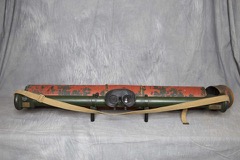
British Rangerfinder No2 Mk7
British Rangefinder No2 Mk7, serial number 3835; probably used with Vickers MG
View artefact
View the artefacts that have been collected by the trust.
British
British Rangefinder No2 Mk7, serial number 3835; probably used with Vickers MG
View artefact
British
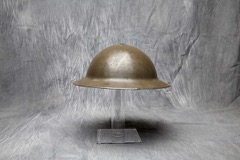
The Brodie helmet is a steel combat helmet designed and patented in London in 1915 by Latvian inventor John Leopold Brodie (Leopolds Janno Braude). A modified form of it became the Helmet, Steel, Mark I in Britain and the M1917 Helmet in the US. Colloquially, it was called the shrapnel helmet, battle bowler, Tommy helmet, tin hat, and in the United States the doughboy helmet. It was also known as the dishpan hat, tin pan hat, washbasin and Kelly helmet. The German Army called it the Salatschüssel (salad bowl). The term Brodie is often misused. It is correctly applied only to the original 1915 Brodie's Steel Helmet, War Office Pattern. From 1936, the Mark I helmet was fitted with an improved liner and an elasticated, sprung webbing chin strap. This final variant served until late 1940, when it was superseded by the slightly modified Mk II, which served the British and Commonwealth forces throughout WW2
View artefact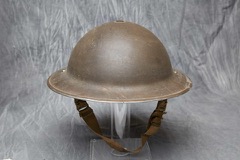
British
The Brodie helmet is a steel combat helmet designed and patented in London in 1915 by Latvian inventor John Leopold Brodie (Leopolds Janno Braude). A modified form of it became the Helmet, Steel, Mark I in Britain and the M1917 Helmet in the US. Colloquially, it was called the shrapnel helmet, battle bowler, Tommy helmet, tin hat, and in the United States the doughboy helmet. It was also known as the dishpan hat, tin pan hat, washbasin and Kelly helmet. The German Army called it the Salatschüssel (salad bowl). The term Brodie is often misused. It is correctly applied only to the original 1915 Brodie's Steel Helmet, War Office Pattern. From 1936, the Mark I helmet was fitted with an improved liner and an elasticated, sprung webbing chin strap. This final variant served until late 1940, when it was superseded by the slightly modified Mk II, which served the British and Commonwealth forces throughout WW2
View artefact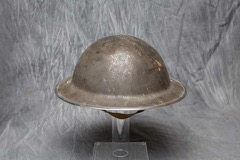
British
The Brodie helmet is a steel combat helmet designed and patented in London in 1915 by Latvian inventor John Leopold Brodie (Leopolds Janno Braude). A modified form of it became the Helmet, Steel, Mark I in Britain and the M1917 Helmet in the US. Colloquially, it was called the shrapnel helmet, battle bowler, Tommy helmet, tin hat, and in the United States the doughboy helmet. It was also known as the dishpan hat, tin pan hat, washbasin and Kelly helmet. The German Army called it the Salatschüssel (salad bowl). The term Brodie is often misused. It is correctly applied only to the original 1915 Brodie's Steel Helmet, War Office Pattern. From 1936, the Mark I helmet was fitted with an improved liner and an elasticated, sprung webbing chin strap. This final variant served until late 1940, when it was superseded by the slightly modified Mk II, which served the British and Commonwealth forces throughout WW2
View artefact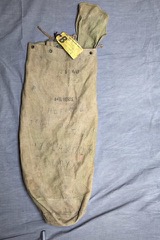
British
British WW1 Kit Bag, marked ‘Sheppard 3546 13 Platoon D Company 4 R Berks’
View artefact
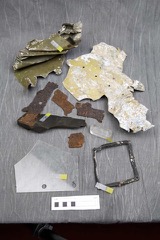
American
Six pieces of mixed aluminium, steel, perspex and rubber C-47 wreckage, recovered from two crash sites; Horsehall Hill Farm, Savernake, and White Hill Copse, Ramsbury
View artefact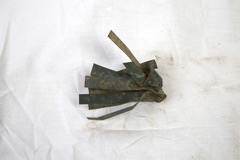
German
A small piece of camouflage scrim, found in tunnels beneath Obersalzberg
View artefact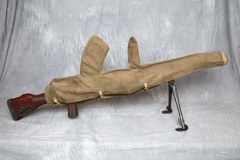
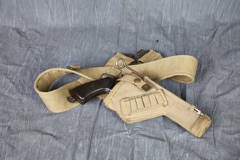
American
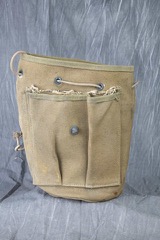
US Army issue canvas M2 Tripod Mount Cover for .30 Cal Browning
View artefact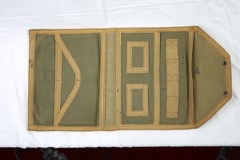
American
Canvas writting case made by Duard Quinn Martin, a rigger with 506th PIR, for his English girlfriend
View artefact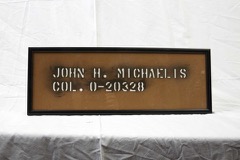
American
Card stencil, used to mark the personal kit of Col John H Michaelis. Kindly donated by Mr Gerald Ward from Chilton Foliat
View artefact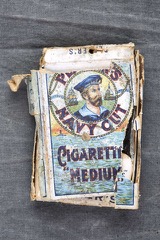
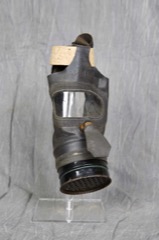
British
Civilian gas respirator, Avon Rubber Company; modified for use by those with respiratory problems; very rare. The General Civilian Respirator is perhaps one of the most iconic pieces of equipment seen on the Home Front during the Second World War. The design was developed at Porton Down and the patented applied for in 1935 by Major John A. Sadd. The relative simplicity of the design meant that these respirators could be easily and quickly produced in large numbers for issue to the British civilian population. It featured a simple sheet rubber facepiece, a single eyepiece made from celluloid, a three point adjustable head harness and a filter secured in place by a rubber band. No exhale valve is present on the standard General Civilian Respirator, instead exhaled air would be expelled though the edges of the facepiece when the wearer breathes out. Several different sizes exist, ranging from those suitable for children all the way up to adult sizes. For younger children and babies, or those with specific medical conditions, special respirators were developed, examples of which can be seen on this page. By the outbreak of the Second World War, over 50 million General Civilian Respirators had been produced, they were issued in a small cardboard box which also doubled up as a carrier, these can be seen in many period photographs of people going about their daily business during the early stages of the Second World War when carrying your respirator was compulsory
View artefact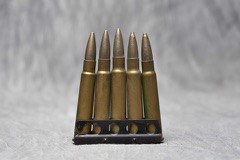
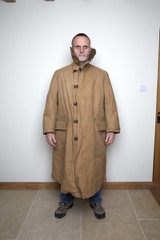
British
Coat Kapok lined; size 3; possible motor cycle dispatch rider’s coat
View artefact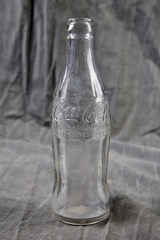
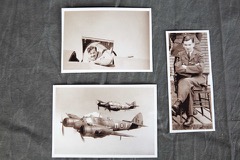
British
Collection of 3 wartime photographs belonging to WO1 Joseph Raymond Smith
View artefact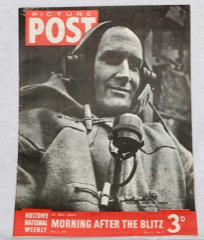
British
Approximately fifty 'The War' and 'Picture Post' magazines published during WW2
View artefact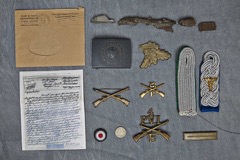
American and German
Collection of German and US insignia, German belt buckle and shell splinters, and original US V-Mail envelope
View artefact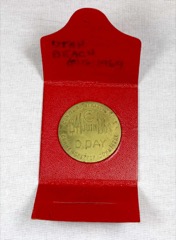
French
This example was presented to William Schneider on Utah Beach, August 1969
View artefact