Artefacts
View the artefacts that have been collected by the trust.
Nationality: German
German
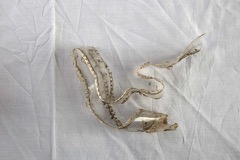
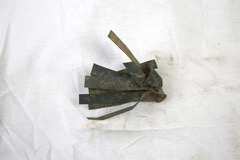
Camoflage Material
A small piece of camouflage scrim, found in tunnels beneath Obersalzberg
View artefact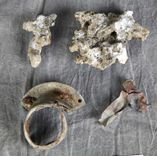
German
Four pieces of Heinkel 111 wreckage
Four pieces of wreckage, recovered from the site of a Heinkel 111, brought down near East Woodhay, on the night of 28/29 July 1940. The aircraft was flown by Fledwebel Theo Metzner
View artefact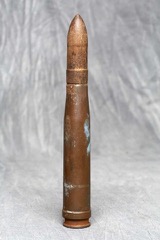
German
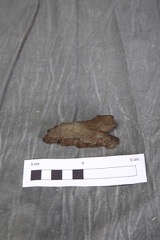
German Bomb Fragment
One piece of German bomb fragment, from bomb dropped on 10 February 1943 on St Mary's Church, Newbury
View artefact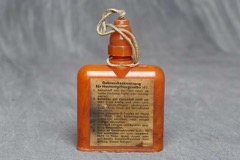
German
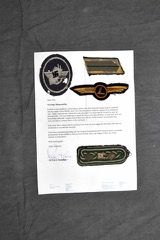
German Insignia
Badges and epaulette taken off a German officer when captured, by Clive Morris
View artefact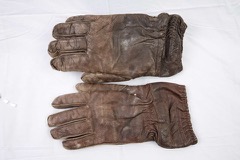
German
German Leather Paratrooper Gloves
Leather Paratrooper Gloves found on the body of a German paratrooper by Charles Asay during the Normandy campaign June/July 1944
View artefact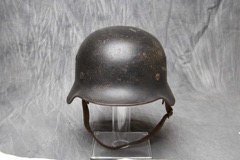
German
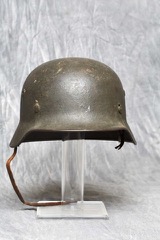
German Luftwaffe Helmet
Grey Steel helmet with Luftwaffe eagle, complete with liner. Libertated from Normandy 1944. The Stahlhelm (German for "steel helmet") is a term used to refer to a series of German steel combat helmet designs intended to protect the wearer from common battlefield hazards such as shrapnel. The armies of the great powers began to issue steel helmets during World War I as a result of combat experience and experimentation. The German Army began to replace the boiled leather Pickelhaube with the Stahlhelm in 1916. The Stahlhelm's distinctive coal scuttle shape, was instantly recognizable and became a common element of propaganda on both sides, like the Pickelhaube before it. The name was used by Der Stahlhelm, a German veterans' organization that existed from 1918 to 1935. After World War II, both East and West German militaries adopted helmets unrelated to the archetypical German helmet designs from the world wars, but continued to refer to the new models as Stahlhelm. The WWII era Stahlhelm continued to be used by police and border guards in West Germany until the 1990s, when they were replaced by modern kevlar helmets
View artefact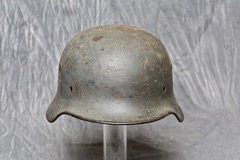
German
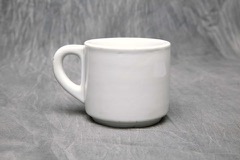
German Nazi Coffee Cup
German Nazi china coffee cup, believed to be manufactured by Wallendorf Procelain
View artefact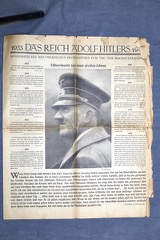
German
German Newspapers
German Newspapers; ‘Das Reich Adolf Hitlers’ and ‘Landsberger Beir’
View artefact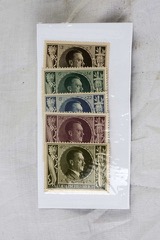
German
German Postage Stamps
Donated by Bob Izumy 506th PIR. Born in California, one of his high school classmates was Norma Jean Baker (a.k.a. Marilyn Monroe). He was among the 120,000 ethnic Japanese and their families placed in internment camps after Pearl Harbor, but he left the camp to complete his education in Iowa. After graduating, he volunteered to join the Army in June 1944, and his extraordinary career began. Izumi signed on with the 442nd Regimental Combat Team, a Japanese-American unit, and then moved on to the 101st Airborne Division as a paratrooper. The 101st was deeply involved in fighting the Germans in Belgium and Luxembourg during the bitter winter of the Battle of the Bulge. Izumi helped liberate many people from concentration camps and, in May 1945, moved on to Berchtesgaden, Hitler's hideout in the Bavarian Alps. While there, he says, "I was shocked to see this little girl in an abandoned house. She was holding a sheet of stamps with Hitler's head printed on them."
View artefact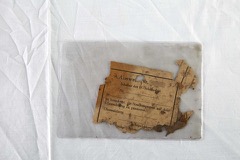
German
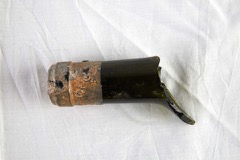
Glass Wine Bottle Neck
Glass wine bottle neck, with cork intact; found in Hitler's Cellar, Obersalzberg
View artefact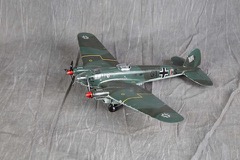
German
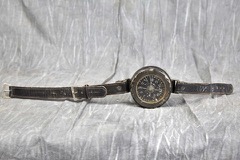
Luftwaffe AK 39 Wrist Compass
Luftwaffe issue, black painted bakelite compass with leather arm strap. This compass was found by Frank Baker in his garden at Woolton Hill following the crash of Heinkel 111P (G1+CS) on 29th July 1940 and has been kindly donated it to the Trust
View artefact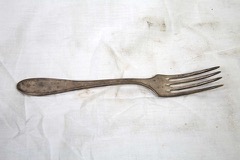
German
Metal Fork
Metal fork, recovered from the dining room of the Hotel Berchtesgener Hof, during renovations in 1999
View artefact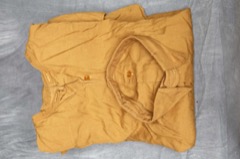
German
Nazi 'Brownshirt' Shirt and Collar
Nazi 'Brownshirt' shirt and collar. 'Brownshirts' (Sturmabteilung, Storm Troopers) were created in 1922 as a Nazi Party militia, and helped Adolf Hitler rise to power in Germany
View artefact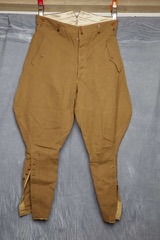
German
Nazi 'Brownshirt' Wool Breeches
Nazi 'Brownshirt' wool breeches. 'Brownshirts' (Sturmabteilung, Storm Troopers) were created in 1922 as a Nazi Party militia, and helped Adolf Hitler rise to power in Germany
View artefact
German
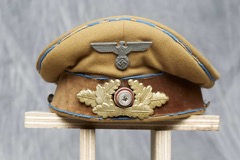
Nazi Party Political Leader's Visor Cap
Nazi Party Political Leader's Visor Cap (peak missing)
View artefact