
Artefacts
View the artefacts that have been collected by the trust.
Nationality: British
British
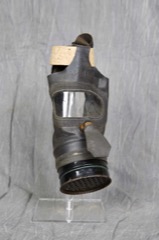
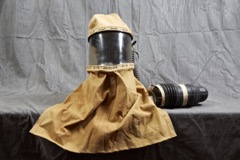
Civilian Respirator (Special)
Civilian gas respirator, Avon Rubber Company; modified for use by those with respiratory problems; very rare. The General Civilian Respirator is perhaps one of the most iconic pieces of equipment seen on the Home Front during the Second World War. The design was developed at Porton Down and the patented applied for in 1935 by Major John A. Sadd. The relative simplicity of the design meant that these respirators could be easily and quickly produced in large numbers for issue to the British civilian population. It featured a simple sheet rubber facepiece, a single eyepiece made from celluloid, a three point adjustable head harness and a filter secured in place by a rubber band. No exhale valve is present on the standard General Civilian Respirator, instead exhaled air would be expelled though the edges of the facepiece when the wearer breathes out. Several different sizes exist, ranging from those suitable for children all the way up to adult sizes. For younger children and babies, or those with specific medical conditions, special respirators were developed, examples of which can be seen on this page. By the outbreak of the Second World War, over 50 million General Civilian Respirators had been produced, they were issued in a small cardboard box which also doubled up as a carrier, these can be seen in many period photographs of people going about their daily business during the early stages of the Second World War when carrying your respirator was compulsory
View artefact
British
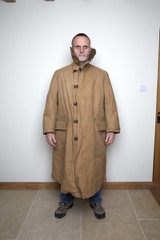
Coat Kapok Lined
Coat Kapok lined; size 3; possible motor cycle dispatch rider’s coat
View artefact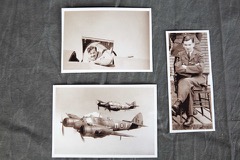
British
Collection of Black and White WW2 Photographs b
Collection of 3 wartime photographs belonging to WO1 Joseph Raymond Smith
View artefact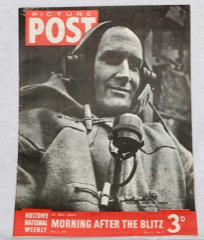
British
Collection of British WW2 Magazines
Approximately fifty 'The War' and 'Picture Post' magazines published during WW2
View artefact
British
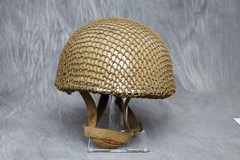
Helmet Steel Airborne Troops
British Parachute Regiment helmet, complete with liner and chin strap. The Helmet Steel Airborne Troops (HSAT) is a paratrooper helmet of British origin worn by paratroopers and members of airlanding units. It was introduced in the Second World War by the British Army and was also used by other Commonwealth armies. It continued to be used in the postwar era until the early 1980s. It was in the process of being replaced, with parachute battalions being issued as priority, when the Falklands War occurred. As with the similarly shaped RAC helmet and despatch rider motorcycle helmet, it was initially manufactured by Briggs Motor Bodies at Dagenham
View artefact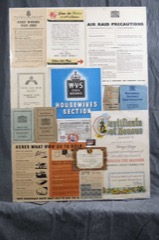
British
Home Front Ephemera
Collection of 20 Civil Defence 'Home Front' information leaflets, ration books, tickets, certificates and identity cards
View artefact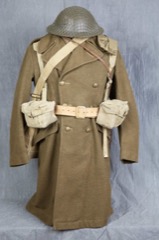
British
Home Guard Great Coat
Service issue Army great coat with Home Guard badges (3rd Battalion Berkshire Regiment)
View artefact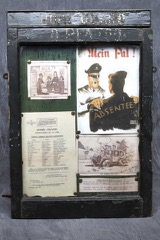
British
Home Guard Notice Board
Home Guard Notice Board, complete with notices: D Platoon, Ramsbury,
View artefact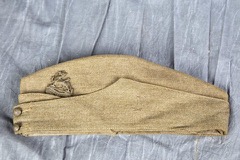
British
Home Guard Side Cap
Original British Army Home Guard Other Ranks Field Service Cap fitted with a Royal Berkshire Regiment officers bronzed cap badge. The scale of issue in the early stages of WW2, especially after the amount of clothing and equipment left behind after the evacuation at Dunkirk, meant that many officers in the Home Guard ended up with the same kit as the men. This cap is a classic example of this. Clearly a standard issue item it has been fitted with an officers quality bronzed cap badge and the buttons have also been changed for officers ones
View artefact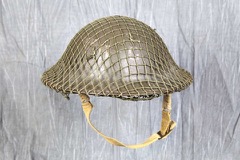
British
Home Guard Steel Helmet
Service issue steel helmet, bronze green with 'HG' stencil; with size 7 liner
View artefact
British
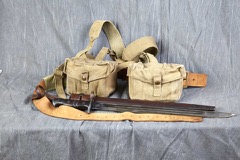
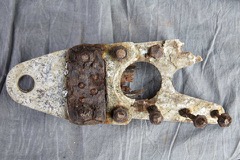
Home Guard webbing and P14/17 Bayonet
Canvas webbing with leather belt, ammunition pouches and P14/17 bayonet and scabard
View artefact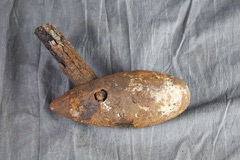
British
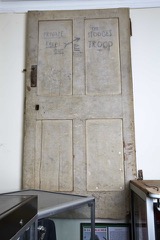
Inernal Door with Grafitti
Internal farm building door, with WW2 grafitti ('Stooges Troop'), recovered from Bradford's Farm, near Newbury
View artefact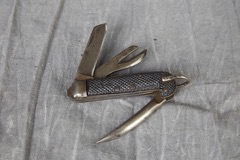
British
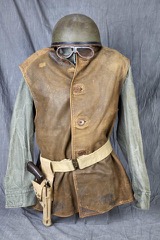
Jerkin Leather No 2 Camouflage
Jerkin Leather No 2 Camouflage, size 3, dressed over a reproduction tank suit
View artefact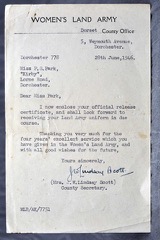
British
Land Army Ephemera
Land Army release letter dated 28 June 1946, release certificate and tractor driving proficiency certificate, belonging to Miss P Park. Newspaper cutting titled ‘Dancing until dawn milking’ and ‘The Women’s Land Army’ guide
View artefact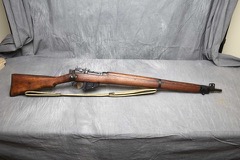
British
Lee Enfield Rifle No 4, Long Branch Manufacture
Lee Enfield Rifle No 4, Long Branch Manufacture, with sling; serial number 29LB675
View artefact