Artefacts
View the artefacts that have been collected by the trust.
Nationality: British
British
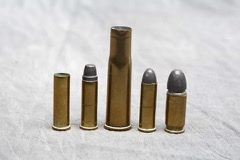
Assorted brass cartridge cases
Five .45 and .38 calibre cartridge cases and bullets
View artefact
British
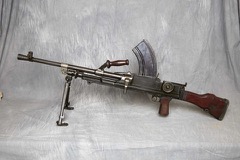
BREN Light Machine Gun Mk 1
BREN LMG (Light Machine Gun) Mk1 serial no. F7420 Enfield dated 1941 (Manufactured Enfield, England at Enfield RSAF – Royal Small Arms Factory). Makers symbol is a capital E and D merged together to make a D with a small central horizontal line off the front upright in towards the centre
View artefact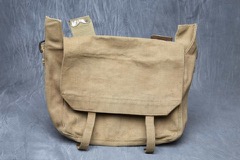
British
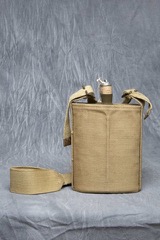
British 37 Pattern Water Bottle
British 37 pattern water bottle, complete with canvas carrier and strap
View artefact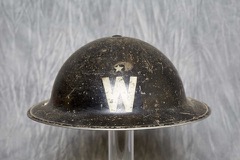
British
British Air Raid Warden’s Helmet
British Air Raid Warden's steel helmet, with black and white 'W' and single proficiency star
View artefact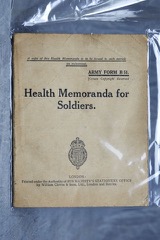
British
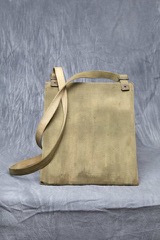
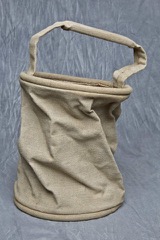
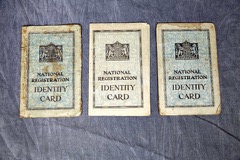
British Civilian Identity Cards
British Civilian Identity Cards, belonging to family of T J Green Trustee
View artefact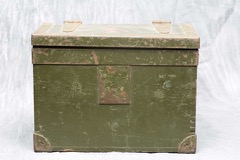

British
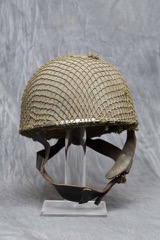
British Parachute Regiment Helmet
British Helmet Steel Airborne Troops (HSAT), with RAMC markings. The HSAT is a paratrooper helmet of British origin worn by paratroopers and members of airlanding units. It was introduced in the Second World War by the British Army and was also used by other Commonwealth armies. It continued to be used in the postwar era until the early 1980s. It was in the process of being replaced, with parachute battalions being issued as priority, when the Falklands War occurred. As with the similarly shaped RAC helmet and despatch rider motorcycle helmet, it was initially manufactured by Briggs Motor Bodies at Dagenham
View artefact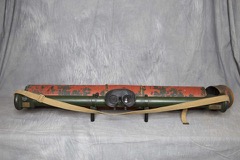
British
British Rangerfinder No2 Mk7
British Rangefinder No2 Mk7, serial number 3835; probably used with Vickers MG
View artefact
British
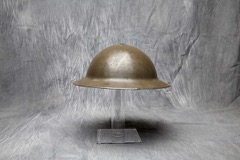
British Steel Helmet
The Brodie helmet is a steel combat helmet designed and patented in London in 1915 by Latvian inventor John Leopold Brodie (Leopolds Janno Braude). A modified form of it became the Helmet, Steel, Mark I in Britain and the M1917 Helmet in the US. Colloquially, it was called the shrapnel helmet, battle bowler, Tommy helmet, tin hat, and in the United States the doughboy helmet. It was also known as the dishpan hat, tin pan hat, washbasin and Kelly helmet. The German Army called it the Salatschüssel (salad bowl). The term Brodie is often misused. It is correctly applied only to the original 1915 Brodie's Steel Helmet, War Office Pattern. From 1936, the Mark I helmet was fitted with an improved liner and an elasticated, sprung webbing chin strap. This final variant served until late 1940, when it was superseded by the slightly modified Mk II, which served the British and Commonwealth forces throughout WW2
View artefact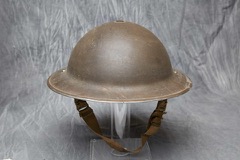
British
British Steel Helmet
The Brodie helmet is a steel combat helmet designed and patented in London in 1915 by Latvian inventor John Leopold Brodie (Leopolds Janno Braude). A modified form of it became the Helmet, Steel, Mark I in Britain and the M1917 Helmet in the US. Colloquially, it was called the shrapnel helmet, battle bowler, Tommy helmet, tin hat, and in the United States the doughboy helmet. It was also known as the dishpan hat, tin pan hat, washbasin and Kelly helmet. The German Army called it the Salatschüssel (salad bowl). The term Brodie is often misused. It is correctly applied only to the original 1915 Brodie's Steel Helmet, War Office Pattern. From 1936, the Mark I helmet was fitted with an improved liner and an elasticated, sprung webbing chin strap. This final variant served until late 1940, when it was superseded by the slightly modified Mk II, which served the British and Commonwealth forces throughout WW2
View artefact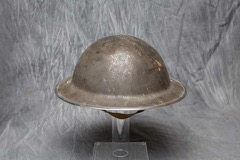
British
British Steel Helmet
The Brodie helmet is a steel combat helmet designed and patented in London in 1915 by Latvian inventor John Leopold Brodie (Leopolds Janno Braude). A modified form of it became the Helmet, Steel, Mark I in Britain and the M1917 Helmet in the US. Colloquially, it was called the shrapnel helmet, battle bowler, Tommy helmet, tin hat, and in the United States the doughboy helmet. It was also known as the dishpan hat, tin pan hat, washbasin and Kelly helmet. The German Army called it the Salatschüssel (salad bowl). The term Brodie is often misused. It is correctly applied only to the original 1915 Brodie's Steel Helmet, War Office Pattern. From 1936, the Mark I helmet was fitted with an improved liner and an elasticated, sprung webbing chin strap. This final variant served until late 1940, when it was superseded by the slightly modified Mk II, which served the British and Commonwealth forces throughout WW2
View artefact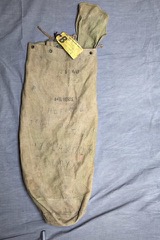
British
British WW1 Kit Bag
British WW1 Kit Bag, marked ‘Sheppard 3546 13 Platoon D Company 4 R Berks’
View artefact